More Than a Meal: The Day Destiny Helping Hands Fed the Children of Kakuma.
Kakuma Refugee Camp, Kenya — There are moments that need no grand announcement. No stage, no ceremony, no spotlight. Just warm food, open hands, and children whose smiles say everything words cannot.
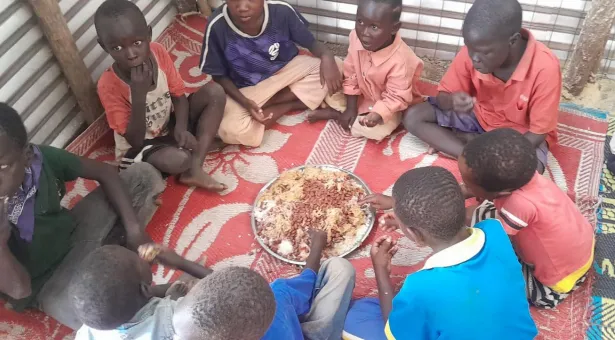
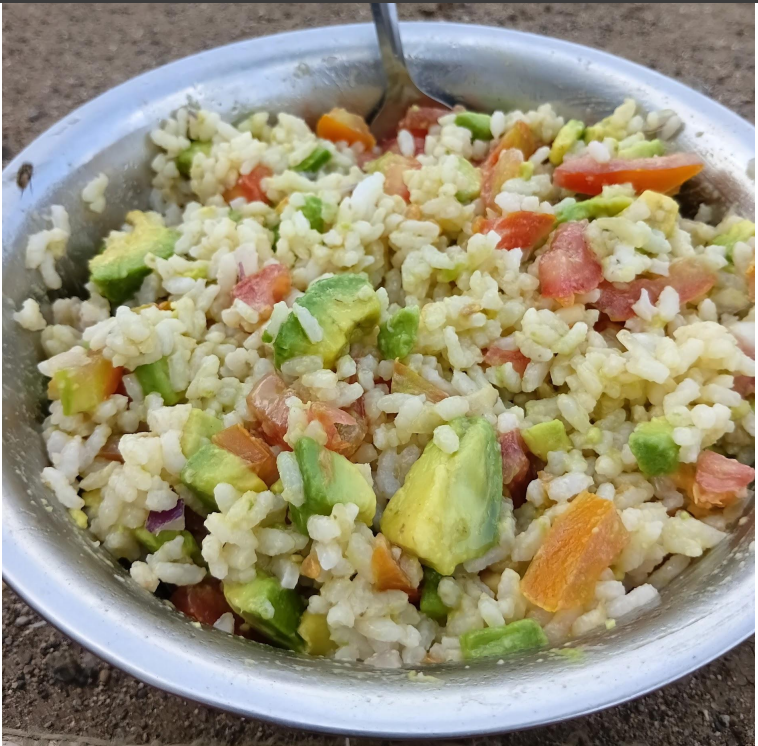
That is what happened when Destiny Helping Hands gathered orphans and street children in Kakuma for a shared meal of rice, beans, and a nutritious recipe prepared with care. What began as an act of service became one of the most powerful experiences the DHH team has ever known.
The children could not hide their joy. They laughed. They played. And when the meal was done, some looked up and said, simply: “This is the best meal we have ever had.”
The Hunger Behind the Smiles
To understand why that moment mattered so deeply, you have to understand what these children face every single day.
The Global Acute Malnutrition rate among refugee children and pregnant or breastfeeding women in Kenya currently stands above 13 percent — a figure that exceeds the 10 percent threshold classified as a nutrition emergency, meaning urgent intervention is required to prevent life-threatening complications. UN World Food Programme
The situation has grown more urgent in recent years. In 2024, over 295 million people across 53 countries and territories faced acute hunger — an increase of almost 14 million people compared to 2023 — while the number of people facing catastrophic levels of hunger reached a record high. UNHCR
Nearly 38 million children under five were acutely malnourished across 26 nutrition crises in 2024. UNICEF
For the children of Kakuma — many of whom are orphaned, unaccompanied, or surviving on the streets — these are not distant statistics. They are the daily reality of waking up without knowing if food will come.
In Kakuma, the World Food Programme has had to repeatedly reduce ration sizes due to funding shortfalls. By early 2025, refugees were receiving just 40 percent of the full recommended daily food ration of 2,100 calories. UN World Food Programme
When a child who has been surviving on less than half of what their body needs sits down to a warm, full meal — and calls it the best they have ever eaten — the weight of that statement carries the full force of the crisis behind it.
What Food Does Beyond the Stomach
UNICEF Executive Director Catherine Russell put it plainly in the 2025 Global Report on Food Crises: “Hunger gnaws at the stomach of a child. It gnaws, too, at their dignity, their sense of safety, and their future.” UNHCR
This is what DHH understood that day. The meal was never just about calories.
For forcibly displaced children, poor-quality diets and nutrient deficiencies can weaken the immune system and contribute to delayed childhood development — causing irreparable long-term damage. UNHCR But the harm of food insecurity is not only physical. For a child who has known loss, abandonment, and the invisibility of life on the streets, being served a hot meal by people who chose to show up for them carries a message that no nutrition programme can fully measure.
You are seen. You matter. Someone cares.
That is what happened in Kakuma. Across the table, the children were not charity cases. They were guests. They were valued. And their laughter — pure, unguarded, filling the air — was the sound of children remembering, even briefly, what it feels like to simply be children.
The Power of a Willing Heart
The DHH team came away from that day changed.
They discovered something that humanitarian frameworks confirm but numbers cannot fully capture: that community-led, relationship-centered responses to hunger do something that food packages alone cannot. They restore dignity. They rebuild trust. They remind vulnerable children that they belong to a community that has not forgotten them.
UNHCR’s Assistant High Commissioner for Operations has noted that while displaced people show remarkable strength, resilience alone cannot end hunger — and that sustainable responses must create real opportunities so people can be nourished not just today, but into the future. Unrefugees
DHH is building exactly that kind of future — one meal, one child, one act of love at a time.
Giving does not require wealth. It requires a willing heart. That lesson, learned over a shared plate of rice and beans in Kakuma, is one the DHH team will carry long after the day is gone.
Be a Destiny Helper
The children of Kakuma are still there. Still hungry. Still waiting to be seen.
Destiny Helping Hands is calling on individuals, families, businesses, and organizations around the world to join this movement — not as distant donors, but as Destiny Helpers. People who believe, like we do, that a warm meal can change a child’s day. That consistent care can change a child’s life. And that when we show up for the most vulnerable among us, we transform generations.
Join us.
📍 Kakuma 3, Zone 2, Block 11, Turkana County, Kenya
📞 +254 787 308 844
Because small acts of kindness create big, lasting impact. And no child should ever have to wonder if today, someone will care.
Sources: WFP Kenya Refugee Nutrition Report 2025; Global Report on Food Crises 2025 (UNICEF/WFP/UNHCR); UNHCR Global Report 2024; UNHCR Nutrition and Food Security Guidance.
